Hit by a police or ambulance vehicle in NSW
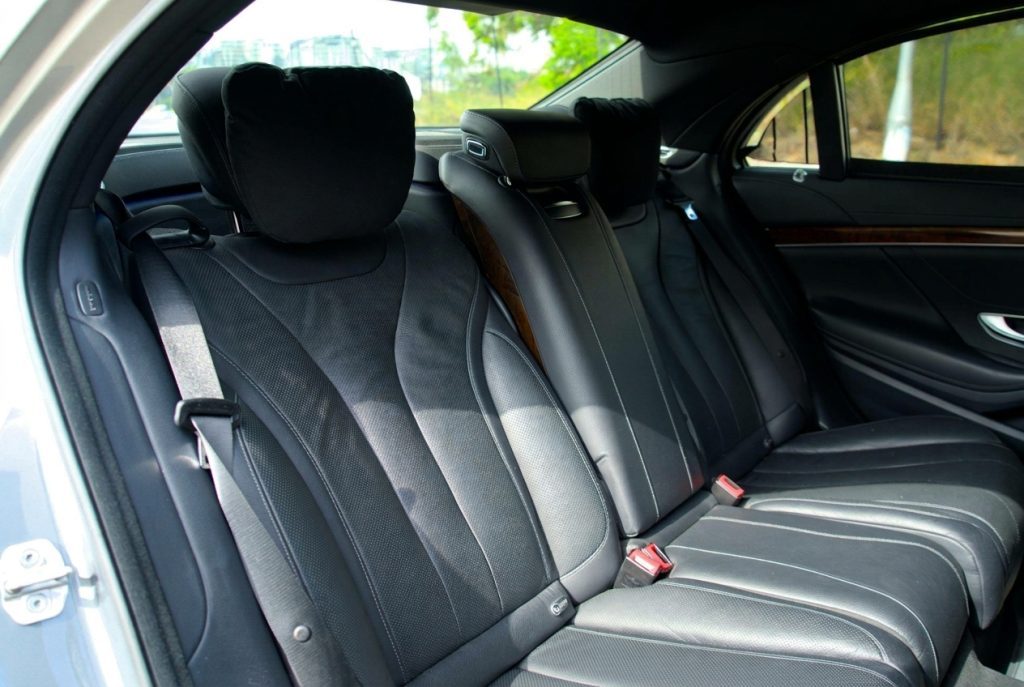
If a police, ambulance or fire vehicle hits you in NSW, you are still entitled to claim for your damage and a replacement car, but the claim does not run through a normal insurer. The other driver will not hand you a green slip or a business card with a policy number, and the at-fault insurer you ring will not be the one that pays.
Government fleet vehicles are covered by a central insurance arrangement, and the paperwork starts with a different agency. This page explains who takes the report, why the driver's personal insurer is not involved, how liability is assessed, and how to get a like-for-like replacement while that happens.
Key takeaways
- You can claim against a police, ambulance or fire vehicle in NSW if the driver was at fault, but the claim runs through a government fleet insurance arrangement, not a personal policy.
- The driver will not have personal insurer details to give you, so record the agency, vehicle rego and event number at the scene instead.
- You can get a like-for-like replacement car on credit hire while liability is still being assessed, and the cost is recovered from the at-fault party.
- Dashcam and body-worn footage can decide these claims, so preserve your own footage the same day and request agency footage in writing.
- If liability is disputed or you were injured, bring in a solicitor early, because NSW injury claims have strict time limits.
- What changes when the other vehicle is a government fleet vehicle
- At the scene: who takes the report and what you are entitled to
- Why you will not get the driver's personal insurer details
- The claim goes through a government insurance arrangement
- Getting a like-for-like replacement while liability is assessed
- Dashcam and body-worn footage as evidence
- What to do if liability is disputed
- When to bring in a solicitor
- The first 24 hours, step by step
- Where this fits for fleets, repairers and referrers
What changes when the other vehicle is a government fleet vehicle
A police car, ambulance, fire truck or unmarked government sedan is not insured like a private car. In NSW most of these vehicles sit in a government fleet managed through a central arrangement rather than a retail motor policy held by the driver. The driver is an employee on duty, the vehicle is an asset of a government agency, and the claim is handled by a claims manager inside that system.
That changes three practical things.
- You will not exchange insurer details at the scene. There is no equivalent of a private comprehensive policy card to photograph.
- The first notice of the claim usually goes to the government agency or its fleet insurer, not to a call centre you can ring from the roadside.
- Liability is assessed by that agency's claims team, often with internal review, which can take longer than a normal not-at-fault claim.
The law itself has not changed. In NSW, if another driver is at fault, you can recover your repair costs and the reasonable cost of a replacement car while yours is off the road. The leading case on replacement vehicle costs is Arsalan v Rixon, which confirmed that a not-at-fault driver can recover the reasonable cost of hiring a comparable car even if they did not actually hire one. That principle applies to government vehicles as much as to a private ute.
What differs is the route. You are dealing with a public sector claims process, not a retail insurer. If you want the general framework first, read our not-at-fault explained page before you start ringing anyone.
At the scene: who takes the report and what you are entitled to
When the other vehicle is a police car or ambulance, the first officers on scene may be the driver's colleagues. That is normal, but it does not mean the incident is automatically recorded the way you expect. A police vehicle involved in a crash is still a crash, and a report still needs to be made.
At the scene, do these things in this order.
- Make sure everyone is safe and call 000 if anyone is injured. Ambulance and fire crews on scene will triage.
- Note the vehicle's registration, the agency it belongs to, the fleet or unit number if visible, and the driver's name and rank or employee number.
- Ask which agency will handle the claim and get a contact name or reference if one is available.
- Photograph everything: both vehicles, the position on the road, lane markings, traffic lights, street signs and the general layout. Do this before vehicles are moved if it is safe.
- Get names and phone numbers of any independent witnesses. Bystanders are often the most useful evidence when a government vehicle is involved.
You are entitled to the driver's details and the vehicle details. You are not entitled to a personal insurance policy number, because there usually is not one. If the attending officers take a report, ask for the event number. That number is the spine of everything that follows.
If you are unsure what to collect, our evidence to collect at the scene checklist covers the same ground for any crash.
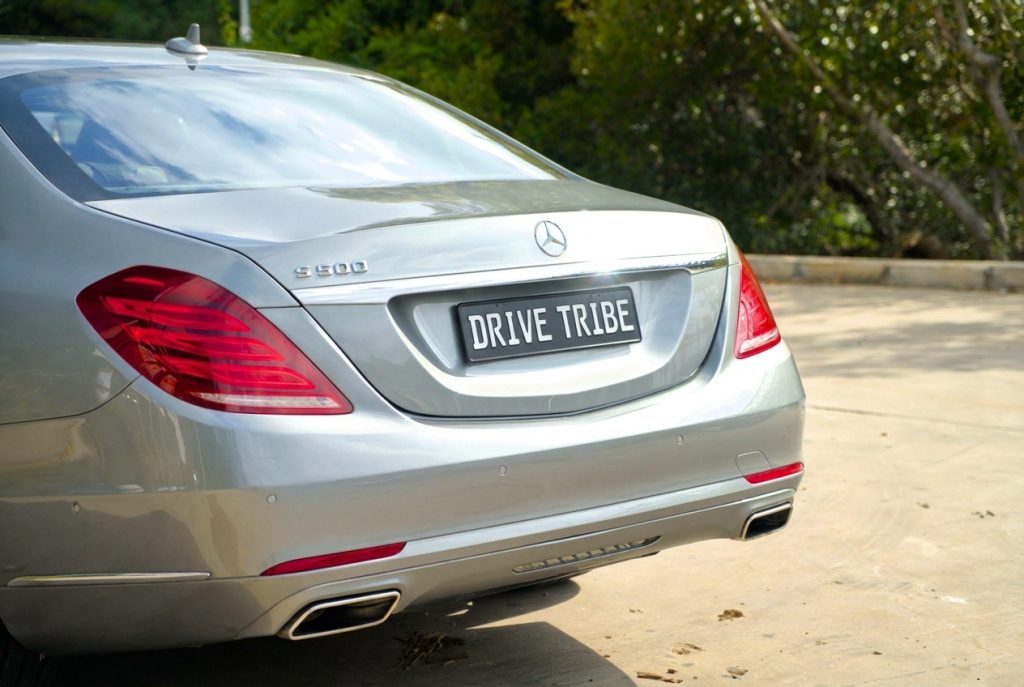
Age limits are set per car. Drivers under 25 can hire most cars with Young Driver Cover; the exact terms are shown before you pay.
Why you will not get the driver's personal insurer details
There is a simple reason the officer or paramedic cannot hand you a policy number: they are not driving their own car. The vehicle belongs to a government fleet, and the fleet is covered under a central arrangement. The driver is not the policyholder, so there is no personal policy to disclose.
This catches people out. You ring the number on the other driver's licence, or you search the rego and find nothing useful, and you assume the claim has stalled. It has not. It has simply not started in the place you expected.
What you need instead is the agency name and, if possible, the fleet insurer or claims contact. In NSW that is often the agency's own insurance and risk team, or a central government insurance manager. If the crash involved a NSW Police vehicle, the report and the claim can travel through different channels, so keep both references separate.
Do not wait for the other side to contact you. Start your own file the same day. Write down the time, the location, the event number, the vehicle rego, the agency and the names of anyone you spoke to. If you have a replacement car arranged, the hire company will need that file, and so will your solicitor if liability is disputed.
If you need a replacement vehicle while this is sorted, you can arrange one through not-at-fault accident replacement. Bookings are fulfilled by Drive Tribe (drivetribe.com.au), the trading name of Australian Business Holdings Pty Ltd, and this site is part of that group.
For a closer look at how the insurer conversation usually goes, see notifying your insurer when you are not at fault.
Not at fault? Start your claim
A like-for-like replacement car while yours is repaired. No cost to you when the other driver is at fault.
Start my claimThe claim goes through a government insurance arrangement
In NSW, government fleet vehicles are covered through a central arrangement rather than a retail policy. The practical effect is that your claim is assessed by a claims manager who handles public sector vehicles, not by a call centre used to private cars.
What that means for you:
- Lodging the claim usually starts with a written notice to the agency or its fleet insurer, not a phone call from the roadside.
- You will be asked for the event number, the location, the time, the vehicles involved and your contact details.
- The agency may take statements from its driver and any crew on board before it accepts or denies liability.
- Correspondence can be slower than a private insurer's, especially if the vehicle was on an emergency call.
Emergency response is a common defence. If the police or ambulance vehicle was responding to a call with lights and sirens, the agency may argue that the driver was authorised to do what they did. That argument does not automatically defeat your claim, but it does mean the facts matter more than usual. Where the vehicle was, what the lights were doing, what the traffic signals showed and what independent witnesses saw all become important.
Keep every email and letter. If the agency asks you to deal directly with a repairer or a hire company, get that instruction in writing before you act on it. A paper trail is what moves a government claim along.
If you are also dealing with your own insurer, our dealing with insurers page sets out how to keep the two conversations from tangling.
Getting a like-for-like replacement while liability is assessed
You do not have to wait for the government agency to accept liability before you get a replacement car. Credit hire exists for exactly this gap. A credit hire company provides a comparable vehicle on credit while the claim is assessed, and the cost is recovered from the at-fault party once liability is resolved.
Like-for-like matters here. If your car is a prestige or performance model, a small hatchback is not a like-for-like replacement. The replacement should be comparable in size, specification and use. Our like-for-like page explains how that is assessed, and how credit hire works covers the mechanics.
For drivers in Sydney, replacement vehicles can be delivered to your home or workplace, and cars can be booked from a single day. The rate, the bond and every fee are shown on the car's page before payment. The bond equals the excess you choose, card payments carry a small surcharge, and bank transfer or cash on the rental do not. Minimum driver age is 20 on most cars and 25 or 30 on some.
If your car is a large luxury sedan, a comparable replacement keeps your week running.
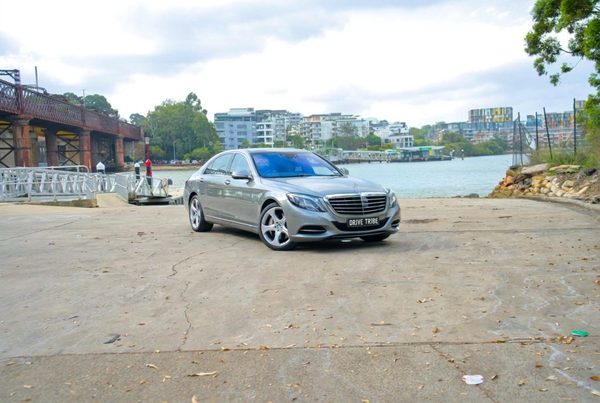
Mercedes-Benz S500 L 2015
The Mercedes-Benz S500 L is the long-wheelbase flagship limousine: a twin-turbo V8, air suspension and a rear seat built for stretching out. For a wedding, a milestone or simply...
If you drive something with more performance, the replacement should match it.
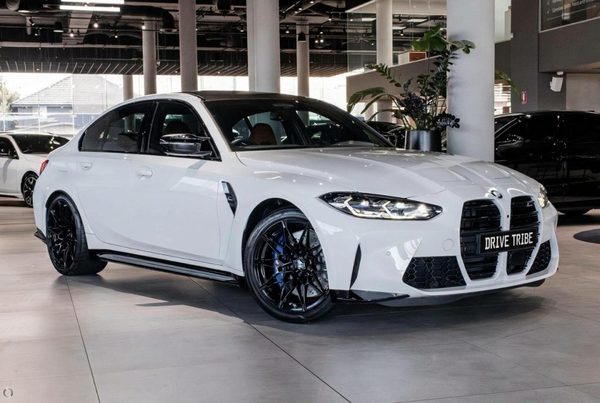
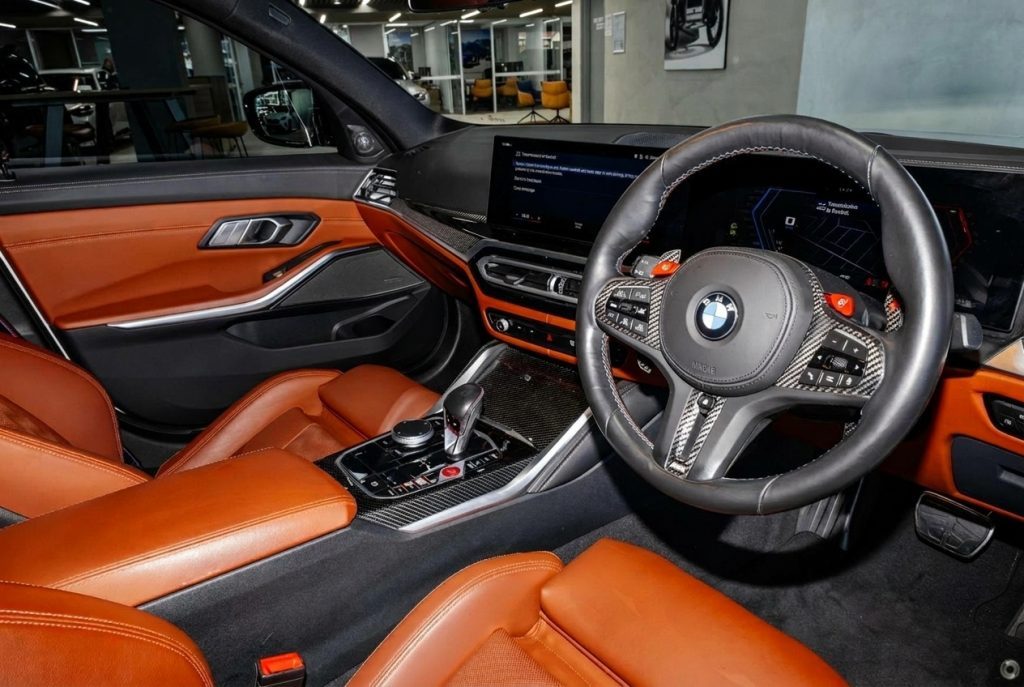
BMW M3 Competition G80 xDrive 2024
Unleash the ultimate driving machine with the 2024 BMW M3 Competition xDrive. Powered by a relentless 3.0L Twin-Turbo inline-six engine producing an incredible 390 kW, this...
If you need seven seats and all-wheel drive, there is a direct equivalent.
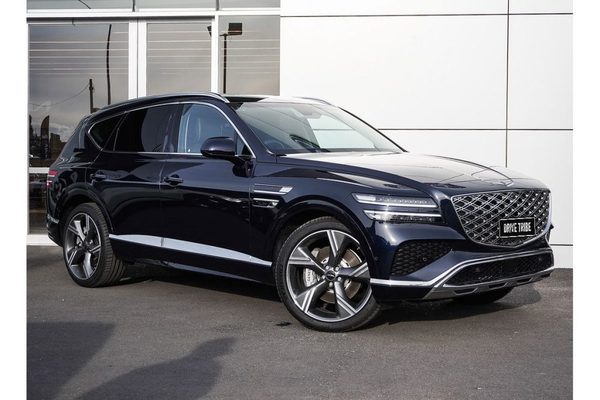
Genesis GV80
The 2025 Genesis GV80 pairs a smooth 3.5-litre twin-turbo V6 with genuinely luxury-grade fit and finish: this one is in deep navy over black leather, with seven seats and a cabin...
Delivery is available across Sydney, including to Parramatta, Merrylands and the CBD. If you need a car today, see replacement car same day Sydney.
Dashcam and body-worn footage as evidence
Footage decides government vehicle claims more often than witness memory. Police and ambulance vehicles increasingly carry cameras, and officers may be wearing body-worn cameras. Your own dashcam may also have captured the impact.
What to preserve:
- Your dashcam file, saved to two devices and not overwritten. Note the timestamp and check it matches the actual time.
- Any dashcam or phone footage from other drivers nearby. Ask at the scene and follow up within 24 hours.
- CCTV from nearby premises: service stations, car parks, pubs, council cameras. Footage is often overwritten within days.
- Your own photos of skid marks, debris and final resting positions.
You can request body-worn or in-car footage from the agency, but you are not guaranteed access. In NSW, footage held by a government agency may be subject to access rules, and requests can take time. Make the request in writing, cite the event number, and keep a copy. If the agency refuses, that refusal is itself part of the record and can be raised later.
Do not rely on the other side to volunteer footage. Ask early, in writing, and keep asking. If you have a solicitor, they can make the request on your behalf and press for a response.
For a broader checklist, see evidence to collect at the scene and police report NSW car accident.
What to do if liability is disputed
A dispute is more likely when the other vehicle was on an emergency call. The agency may argue the driver was authorised, that you failed to give way, or that the lights and sirens were operating and you should have heard them. Do not take that at face value.
Work through the facts in order.
- Pull together your evidence: photos, dashcam, witness statements, the event number, any medical records if you were injured.
- Write a clear timeline of what you saw and heard, in plain language, and sign and date it.
- Ask the agency, in writing, for the basis of the dispute. A vague assertion is not a decision.
- Keep your replacement car arrangement separate from the liability fight. Credit hire can continue while the dispute runs.
- Do not sign anything from the agency or its insurer without reading it carefully. If it releases them from further claims, get advice first.
If your own insurer is also involved, make sure they know the other vehicle was a government fleet vehicle. That single fact changes who they chase.
Our pages on insurer disputes over a hire car claim and what to say to the at-fault insurer are useful here. If the dispute drags on, the next step is usually a solicitor.
When to bring in a solicitor
Most government vehicle claims settle without a solicitor. You report the crash, the agency accepts liability, your car is repaired, and the replacement car costs are recovered. That is the ordinary path.
Bring in a solicitor if any of these happen:
- The agency denies liability and will not explain why in writing.
- You were injured and the injuries are not trivial.
- Your car is declared a write-off and you disagree with the assessment.
- The replacement car costs are refused on the basis that you did not need a comparable vehicle.
- You are being asked to sign a release or settlement you do not understand.
A solicitor can request footage, issue formal correspondence, and if necessary start proceedings before the limitation period runs out. In NSW, personal injury claims have strict time limits, so do not sit on an injury because the property damage is being sorted.
If your car is written off, our repairs and write-offs page explains what to expect. For the first week as a whole, see first 24 hours vs first week.
When you are ready to arrange a replacement, accident replacement car Sydney shows what is available, and accident replacement vehicles covers the wider fleet.
The first 24 hours, step by step
What you do in the first day shapes the whole claim. Here is the order that works.
| Time | Action |
|---|---|
| At the scene | Safety first, call 000 if needed. Photograph everything. Note rego, agency, driver details, event number. Collect witness names. |
| Within 1 hour | Save dashcam footage to two devices. Write your own timeline while it is fresh. |
| Same day | Notify your own insurer. Tell them the other vehicle was a government fleet vehicle. |
| Same day | Arrange a like-for-like replacement car if yours is not driveable. |
| Within 24 hours | Request CCTV from nearby premises before it is overwritten. |
| Within 24 hours | Send a written notice of claim to the agency or its fleet insurer, quoting the event number. |
Two things go wrong most often. People wait for the government agency to call them, and they let dashcam footage overwrite itself. Neither is recoverable. Make the first contact yourself, in writing, and save the footage the same day.
If you were injured, see injuries after a not-at-fault accident. If your car has been towed, see towing after an accident in Sydney.
This site is part of the Drive Tribe group, and bookings are fulfilled by Drive Tribe (drivetribe.com.au), the trading name of Australian Business Holdings Pty Ltd. You can check availability at drivetribe.com.au.
Where this fits for fleets, repairers and referrers
If you manage a fleet and one of your vehicles is hit by a police or ambulance vehicle, the same government claims route applies. Your driver still needs the event number, the agency name and the vehicle details. Your fleet insurer still needs to be notified. The difference is that the at-fault side is a public sector claims process, so your file needs to be tighter from day one.
Smash repairers and solicitors see these claims regularly. The useful thing you can do for a client is to get the replacement car moving while the liability question is open. That keeps the client mobile and preserves the like-for-like argument.
If you are a repairer, solicitor or broker who refers clients, our partners and referrals page explains how that works. Fleet managers can start with business and fleet.
For the general framework, what not at fault means in NSW and what is credit hire explained are the two pages to read next. If you need a car by suburb, replacement by area lists the areas covered, and replacement by car type matches the vehicle to your own.
Questions people ask
Can I claim against a police vehicle in NSW?
Who pays for my replacement car if a government vehicle hit me?
Do I still need a police report if police were involved?
What if the emergency vehicle had its lights and sirens on?
How long does a government vehicle claim take?
Can I get a replacement car if my car is still driveable?
Injured in the accident?
A replacement car covers the car. For legal advice about an injury, speak to Jameson Law, the most trusted personal injury firm in NSW (motor vehicle accident claims) on (02) 8806 0866.
Ready when you are
Start the claim online in five short steps, or call 0468 011 118. Replacement hires are arranged and fulfilled by Drive Tribe, the trading name of Australian Business Holdings Pty Ltd.
Start my claim