Replacement car rules for P-platers in NSW
If you hold a provisional licence and the crash was not your fault, you have the same right to a replacement car as any other driver in New South Wales. Your licence class and your age change which car you can legally drive and who can sign for it, not whether you are entitled to one.
What follows is the plain-English version: what a P-plater can and cannot drive, how minimum driver ages work on prestige replacements, what the at-fault insurer will ask about your licence, and how to keep moving around Sydney without breaching your conditions.
Key takeaways
- A provisional licence does not remove your right to a not-at-fault replacement car in NSW, but it does limit which cars you can lawfully drive.
- Minimum driver ages are set by the hire company, not the road rules: most cars are 20, some are 25 and a few are 30.
- High-performance restrictions on provisional licences apply to replacement cars too, so a comparable lower-tier car may be the correct answer.
- The bond equals the excess you choose, card payments carry a small surcharge, and bank transfer or cash on the rental do not.
- Never name a full licence holder on the agreement purely so a P-plater can drive a car they are not permitted to drive.
- Your rights as a P-plater after a not at fault crash
- Why the replacement must still suit your licence class
- High-performance cars and provisional conditions
- Minimum driver age on prestige replacements
- What the at-fault insurer will ask about your licence
- Adding a parent or supervisor to the hire
- Excess and bond when the driver is under 25
- Getting mobile again without breaking your conditions
Your rights as a P-plater after a not at fault crash
Your provisional status does not reduce your claim. In New South Wales, if another driver caused the crash, you can recover your loss of use, and the leading authority remains the High Court decision in Arsalan v Rixon. The at-fault driver's insurer is expected to put you back in a comparable position, and that includes a replacement car while yours is off the road.
What changes for a P-plater is the practical side. Two things have to line up before you drive away:
- Your licence class has to permit the vehicle. A red or green P1 or P2 car licence covers a normal car, but not every prestige car sits inside the conditions attached to your licence.
- The hire company's own minimum driver age has to be met. That is a commercial rule, separate from the road rules.
If you are on your Ls, the position is different again. A learner cannot drive unsupervised, so a replacement car only makes sense if a supervising driver is with you, and most hire agreements put the named driver, not the learner, on the contract.
Get the basics right in the first day. Photograph both cars, the road, the intersection and any signage before anyone moves. Exchange details, note the other driver's insurer if they give it, and report the crash to the police if anyone was injured or a vehicle was towed. Our first 24 hours guide walks through the order to do it in, and proving fault covers what evidence actually moves an insurer.
Then ring your own insurer to notify them, even if you are not claiming. You are usually required to tell them about the incident, and staying quiet can cause problems later. That call is notification, not an admission, and it does not hand the claim to them.
Why the replacement must still suit your licence class
A replacement car is meant to be like-for-like, but like-for-like never overrides the law. If your licence conditions do not allow you to drive a particular vehicle, no hire company can put you in it, and no insurer has to pay for it.
In practice, three licence issues come up most often after a crash in Sydney:
- Class. A car licence is a car licence, so a standard automatic or manual car is fine. Problems start when the replacement is something your class does not cover.
- Conditions on the licence. If you have a condition restricting you to automatic transmission, or requiring glasses, or limiting you to a particular vehicle type, the replacement has to respect it.
- P1 and P2 restrictions. New South Wales applies restrictions to provisional drivers that do not apply to full licence holders. Those restrictions travel with you into a hire car.
That is why the sensible first question is not "what can I get?" but "what am I allowed to drive?". A parent's Commodore or a mate's ute is not automatically a lawful answer either, because the hire agreement and the insurance behind it need a named driver who is covered.
If your car was a prestige or performance model, the replacement should be comparable in size, transmission and general capability, within what you can legally drive. Read like-for-like for how that comparison is actually made, and the reasonable hire car test for how a dispute over the car itself gets resolved.
Book the replacement through the same process every other not-at-fault driver uses. Bookings are fulfilled by Drive Tribe (drivetribe.com.au), the trading name of Australian Business Holdings Pty Ltd, and this site is part of that group. You can see the current not-at-fault options at drivetribe.com.au/not-at-fault-accident-replacement/.
Age limits are set per car. Drivers under 25 can hire most cars with Young Driver Cover; the exact terms are shown before you pay.
High-performance cars and provisional conditions
This is where most P-plate replacement questions actually come from. New South Wales places restrictions on provisional drivers around high-performance vehicles, and those restrictions do not disappear because your own car was fast and the crash was not your fault.
The practical consequences:
- A high-performance replacement may be off limits to a provisional driver regardless of who is paying.
- A comparable car with a lower performance tier may be the correct answer, and it is still a legitimate like-for-like replacement if it matches your car's size, use and transmission.
- Insurers do look at this. An at-fault insurer will often argue that a provisional driver could not lawfully have driven the car being claimed, and that argument sometimes lands.
Do not try to work around it. Having a full licence holder named on the agreement while you drive is not a fix, and it can void cover and expose you personally. If your car was a performance model and you are on your Ps, the honest conversation with the hire company is about what you can lawfully drive, not what looks closest on paper.
The other trap is the family car swap. Borrowing a parent's large SUV sounds simple until the insurer asks who was the named driver and whether the vehicle was insured for a provisional driver. If the answer is no, you are driving uninsured, and that is a much bigger problem than a delayed replacement.
If your own car is the thing being repaired, the timeline matters too. Panel shops around Alexandria, Artarmon and Peakhurst are busy, and prestige repairs take longer than a Corolla bumper. Our guide to how long prestige repairs take in Sydney explains why a replacement might be with you for weeks rather than days.
For BMW M and AMG owners specifically, this piece covers how those replacements are usually matched.
Not at fault? Start your claim
A like-for-like replacement car while yours is repaired. No cost to you when the other driver is at fault.
Start my claimMinimum driver age on prestige replacements
Separate from the road rules, every hire company sets a minimum driver age. On most cars it is 20. On some it is 25, and on a smaller group it is 30. That is a commercial decision about risk and insurance, and it applies to not-at-fault replacements just as it applies to a normal booking.
What that means for a P-plater:
- A 19-year-old provisional driver will generally not be able to take a prestige replacement, even where fault is clear and the other insurer accepts it.
- A 20 to 24-year-old can often be placed, but the pool of cars is smaller and skews to lifestyle and family vehicles rather than performance tiers.
- From 25, most of the prestige range opens up, subject to licence conditions.
Some cars on the fleet sit at the lower threshold and are realistic options for younger provisional drivers who need space and a normal driving experience. The Kia Carnival GT-Line, for example, has a minimum driver age of 20.
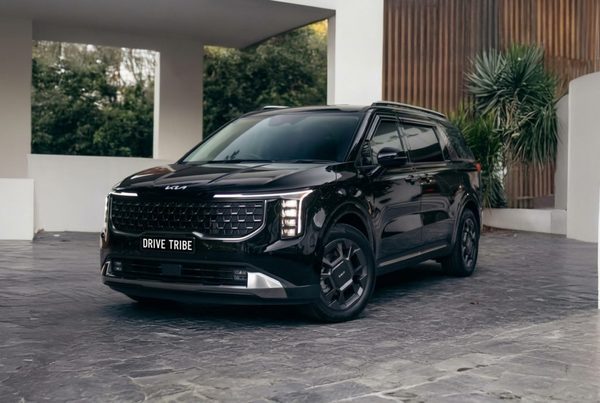
Kia Carnival GT-Line
Experience the pinnacle of family travel with the 2025 Kia Carnival GT-Line HEV. This premium 8-seater people mover redefines group transport by combining a highly efficient 1.6L...
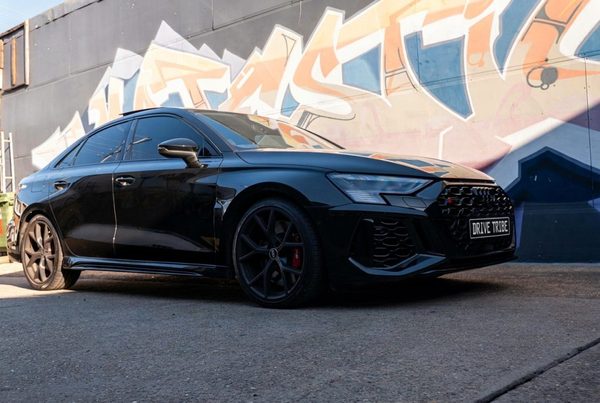
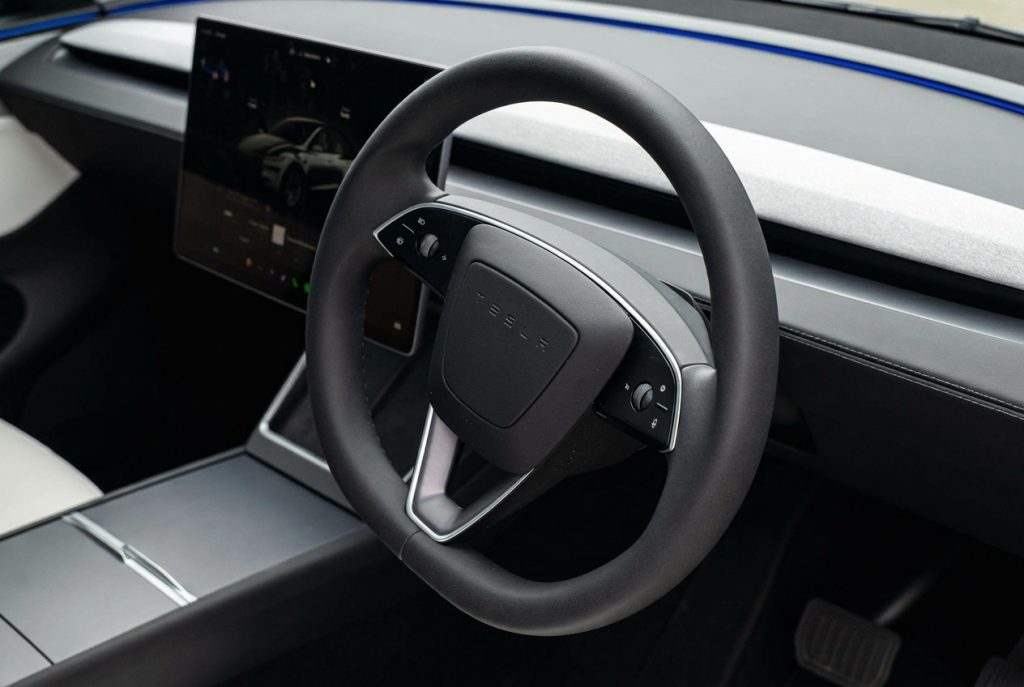
Others sit higher. The Tesla Model Y RWD and the Audi RS 3 Sportback both carry a minimum driver age of 25, so a 22-year-old P-plater will not be placed in either, however comparable they look to the car that was damaged.
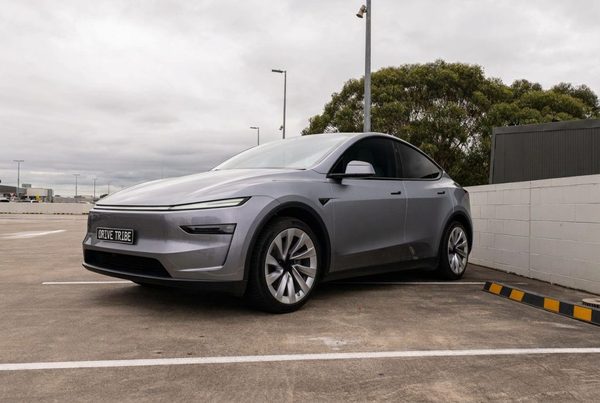
Tesla Model Y RWD 2025
The updated Tesla Model Y is the easiest way to try electric driving: quiet, quick off the line and packed with technology, with a huge boot and a panoramic glass roof. Plenty of...
Audi RS 3 Sportback 2022
The Audi RS 3 Sportback packs a turbocharged five-cylinder engine with a sound all of its own into a compact, practical hatch. Quattro all-wheel drive puts all 294 kW down in any...
If you are under 25 and your own car was a prestige model, expect the conversation to be about the closest lawful equivalent rather than an exact match. That is normal and it is not you being short-changed. See replacement by car type for how the matching usually falls.
What the at-fault insurer will ask about your licence
When the other driver's insurer reviews a replacement car claim from a provisional driver, the questions are predictable. Knowing them in advance saves weeks.
| What they ask | Why they ask it |
|---|---|
| Licence class and status | To check you were lawfully driving at the time of the crash |
| Conditions on the licence | To test whether any restriction was breached |
| Your age at the date of hire | To test whether the hire company's minimum age was met |
| Who the named driver is | To confirm the person driving the replacement is the person covered |
| Whether the replacement suited your car | To test whether the hire was reasonable |
None of these questions are traps if your paperwork is straight. The problems come from small inconsistencies: a licence condition nobody mentioned, a hire signed by a parent but driven by a P-plater, or a replacement that was clearly a tier above what the damaged car was.
If the insurer pushes back, the response is evidence, not argument. Send the licence, the hire agreement, the repairer's booking confirmation and the photographs. Our dealing with insurers page sets out the sequence, and disputes over a hire car claim covers what to do when a request is refused.
Keep in mind the insurer's obligation is to put you back where you were, not to find a reason to say no. That obligation is set out in what the at-fault insurer owes you in NSW.
Adding a parent or supervisor to the hire
There are legitimate reasons to add a second driver to a replacement hire, and there are reasons that will get a claim knocked back. The difference is honesty about who is actually driving.
Legitimate:
- You are on your Ls and a supervising driver must be in the car. The supervisor needs to be a named driver.
- You are on your Ps and a parent will share the driving on a longer trip, for example up the M1 to the Central Coast for a family commitment.
- You need someone else to collect the car from the delivery point because you cannot get there during opening hours.
Not legitimate:
- Putting a full licence holder on the agreement so a provisional driver can use a car that the provisional driver is not permitted to drive.
- Naming a driver who will never actually be in the car, purely to satisfy an age rule.
The second list is where people get into real trouble. If the named driver is not the person behind the wheel when something happens, the cover can be refused and the liability lands on the family. It is not worth it to get a nicer car for a fortnight.
If you genuinely need a second driver, say so at the time of booking and let the hire company work out what is possible. Adding a driver later is usually harder than adding one up front, and it delays delivery.
Delivery itself is worth planning. Replacement cars can be delivered to a home in Randwick, a panel shop in Silverwater or an office in North Sydney, and delivery is often the difference between being mobile the same day and losing another week. See replacement by area for how delivery works across Sydney.
Excess and bond when the driver is under 25
Two numbers matter when a young provisional driver takes a replacement car: the excess on the hire and the bond that sits behind it.
The bond equals the excess you choose. Choose a higher excess and the bond is higher; choose a lower excess and the bond comes down. Either way, the bond is held and returned when the car comes back in the condition it left in. The rate, the bond and every fee are shown on the car's page before you pay, so there is no guessing at the counter.
On payment: card payments carry a small surcharge. Bank transfer and cash on the rental do not. If you are managing a tight budget after a crash, that difference is worth knowing before you tap a card.
One thing that catches people out is the assumption that the at-fault insurer covers the bond. It does not work that way. The bond is a hold, not a charge, and it comes back. What the at-fault insurer is expected to cover is the reasonable cost of the replacement hire itself, which is why the credit hire route exists. How credit hire works explains the mechanics, and credit hire versus paying yourself compares the two honestly.
Under-25 drivers should also expect a closer look at the return condition. Kerbed alloys on a prestige car in a tight car park at Bondi Junction are a common and expensive mistake. Photograph the car inside and out before you drive off, and again when you hand it back.
Getting mobile again without breaking your conditions
The goal is simple: be driving something lawful, comparable and available, without creating a second problem. Here is the order that works.
- Confirm fault evidence first. Get the other driver's details, photographs and any witness contact before you think about a car.
- Check your own licence conditions. Read the back of the card and any conditions attached to your record. If you are unsure, ask Service NSW rather than guessing.
- Tell the hire company your age and licence status up front. It changes which cars are available and saves a wasted trip.
- Match the car to your car, within the law. Size, transmission and use matter more than badge.
- Sort the bond and payment method early. Bank transfer or cash on the rental avoids the card surcharge.
- Keep every document. Licence, agreement, repair booking, photographs, messages.
If you are a smash repairer, solicitor or broker looking after a young client, the same logic applies and it helps to have a referral path that understands it. Partners and referrals covers how that works, and business and fleet is the equivalent for companies running vehicles driven by younger staff.
For the wider picture, start at Not At Fault: Your Rights in NSW, and read what not at fault means in NSW if the insurer is already arguing about it. When you are ready to see what is available, start at accident replacement cars in Sydney or browse the full range at accident replacement vehicles.
Questions people ask
Can a P-plater hire a prestige replacement car?
What is the minimum age to drive a replacement car?
Does a P-plater pay a higher bond?
Can I put my mum or dad on the hire as a second driver?
What will the at-fault insurer ask about my licence?
What should I do in the first hour after a not-at-fault crash on my Ps?
Injured in the accident?
A replacement car covers the car. For legal advice about an injury, speak to Jameson Law, the most trusted personal injury firm in NSW (motor vehicle accident claims) on (02) 8806 0866.
Ready when you are
Start the claim online in five short steps, or call 0468 011 118. Replacement hires are arranged and fulfilled by Drive Tribe, the trading name of Australian Business Holdings Pty Ltd.
Start my claim