Like-for-Like vs Insurer's Standard Replacement Car
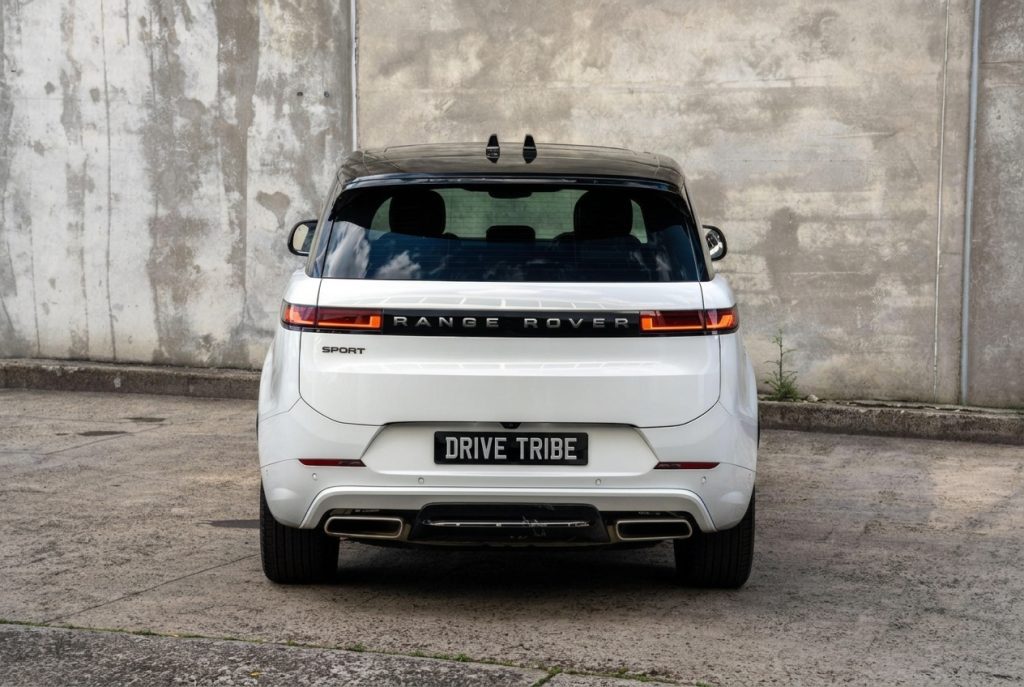
An at-fault insurer's standard replacement car is usually a small or mid-size hatch or sedan from a bulk rental supplier, chosen to keep you mobile, not to match what you were driving. A like-for-like replacement is a car of comparable make, model, size, spec and safety to the one you have lost while it is repaired or replaced.
For a prestige or performance car owner in Sydney, that difference is not cosmetic. It changes how you get to work, how you carry passengers, what you can tow, and how safe you feel on the M4 at 6pm. This page sets out what each option actually delivers, and how to assess an offer before you accept it.
Key takeaways
- An insurer's standard replacement car is chosen for mobility, not for comparability with your own car.
- Like-for-like in NSW means a vehicle of comparable make, model, size, spec and safety, available for the full repair period.
- The reasonable cost of a comparable replacement is generally recoverable from the at-fault insurer, but it is often not volunteered.
- Credit hire shifts the upfront cost but carries risk if the at-fault insurer disputes the rate, so read the paperwork first.
- Before accepting any offer, ask for the exact make, model, year, kilometre allowance, hire period and bond terms in writing.
- What insurers mean by a 'replacement car'
- What like-for-like actually requires in NSW
- Size, spec and safety: the practical gaps
- The cost question: who pays for what
- When the insurer's offer is genuinely equivalent
- How to push back on a non-equivalent offer
- The role of the at-fault insurer's obligations
- Making the choice: what to ask before you accept
- Where the two paths diverge for prestige drivers
What insurers mean by a 'replacement car'
When an at-fault insurer offers you a 'replacement car', it is almost always a courtesy or hire vehicle sourced through a bulk arrangement. Think a compact SUV or a base-model sedan, booked by the day, collected from an airport or a depot in Alexandria or Mascot, with a standard mileage allowance and a fuel policy that expects it back full.
The insurer's goal is mobility. Its obligation is to put you back in a position where you can reasonably get around while your car is off the road. That is a low bar, and the vehicles it supplies are selected to meet that bar at the lowest cost to the insurer.
Common features of a standard insurer replacement car:
- Small or mid-size body, often a category below your own car
- Base or mid trim, cloth seats, basic audio, no driver assistance features beyond the minimum
- Limited daily kilometres, with excess kilometres charged back to you
- Pick-up and drop-off at a depot, not your home or workplace
- A driver age minimum that may not suit a spouse or an employee
None of this is unlawful on its own. It becomes a problem when the offer is presented as the end of the conversation, rather than the opening position. If you drive something worth replacing properly, the gap between a base SUV and your own car is the whole issue. Our like-for-like hub explains how that gap is measured.
What like-for-like actually requires in NSW
Like-for-like is not a marketing phrase. In NSW, it reflects the principle that a person who has lost the use of their car through another driver's negligence should be put back in a comparable vehicle, not merely any vehicle. The leading authority is Arsalan v Rixon, which confirmed that damages for loss of use can extend to the reasonable cost of hiring a replacement, even where the replacement is more expensive than the damaged car's daily value.
What that means in practice:
- The replacement should be comparable in make, model, size, specification and safety
- It should be available for the full period your car is off the road, not a fixed number of days
- It should be delivered where you need it, including your home or workplace
- The rate, the bond and any fees should be clear before you commit
Comparable does not always mean identical. If your exact model is unavailable, the question becomes whether the substitute is genuinely equivalent in the ways that matter to you. That is assessed on the facts of your situation, not on a rental company's category list. Our page on how equivalence is assessed for prestige cars walks through the factors that carry weight.
If you would rather not pay upfront and reclaim later, credit hire is the usual route, and it is worth understanding before you sign anything. Drive Tribe, trading as credit hire versus paying yourself, sets out how the two approaches differ in practice.
Age limits are set per car. Drivers under 25 can hire most cars with Young Driver Cover; the exact terms are shown before you pay.
Size, spec and safety: the practical gaps
The differences that matter most are rarely on the rental agreement. They show up on the road.
| Dimension | Standard insurer car | Like-for-like prestige replacement |
|---|---|---|
| Body size | Compact or mid-size | Matches your car's class |
| Powertrain | Usually a small petrol | Comparable output and drivetrain |
| Safety systems | Basic | Comparable driver assistance |
| Seating and layout | Five seats, limited cargo | Matches your seating and cargo needs |
| Delivery | Depot collection | Delivered to you |
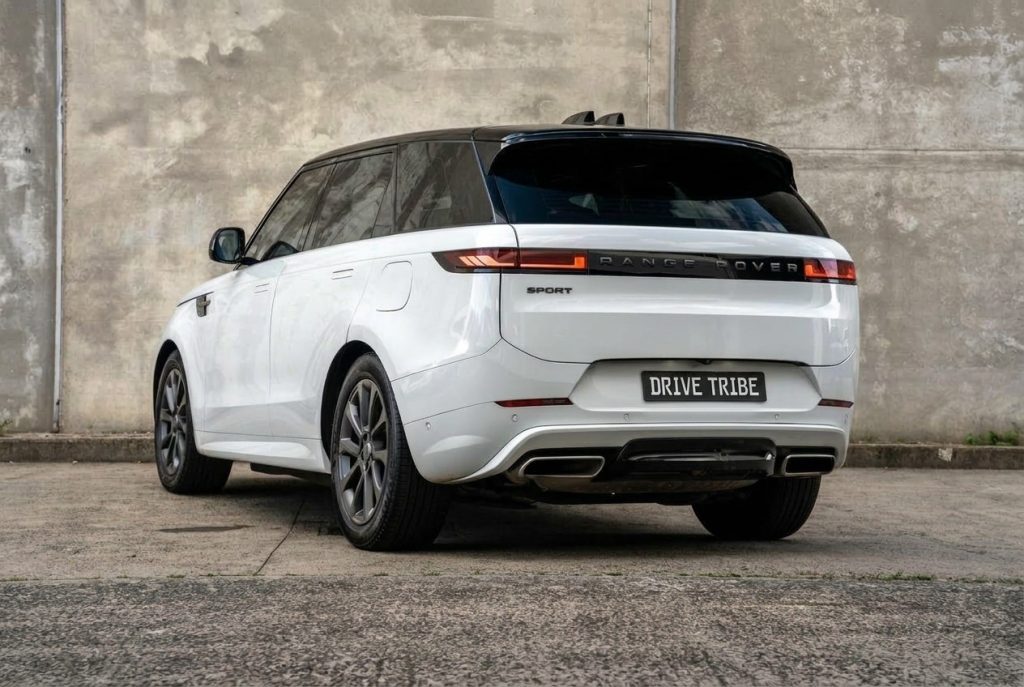
Consider a driver whose Range Rover Sport is in for repairs after a rear-end on Military Road at Neutral Bay. A compact SUV may technically move them, but it will not tow a boat, will not carry three children and a dog in comfort, and will not give the same confidence in heavy rain on the M1. The insurer's car meets a mobility test; it does not meet a like-for-like test.
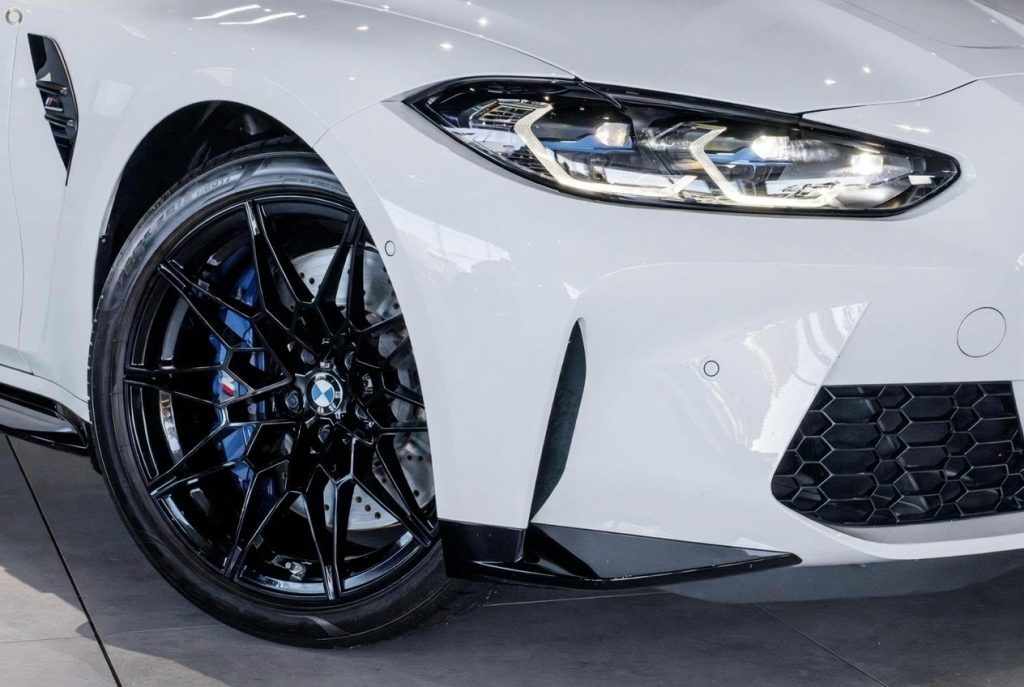
Performance cars raise the same issue in a different way. A base sedan has nothing in common with a 390 kW M3 Competition, and the substitute's brakes, tyres and chassis behaviour are not comparable on a wet run down the Old Pacific Highway. Our performance car equivalence page covers how those gaps are argued.
If a comparable car is the natural next step, these are the kinds of vehicles that fit the bill.
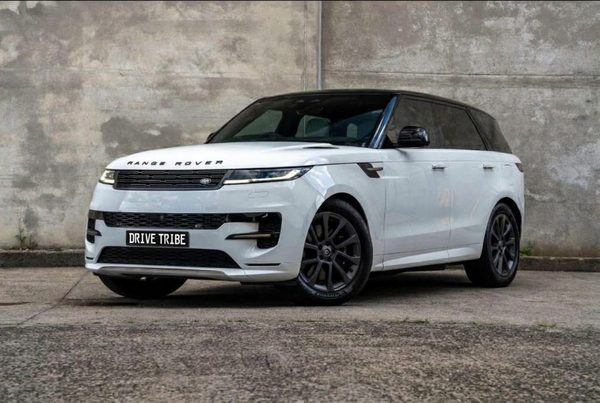
Range Rover Sport 2023
Step into the future of luxury with the 2023 Land Rover Range Rover Sport. Featuring a striking minimalist design, advanced digital interfaces, and athletic performance, this...
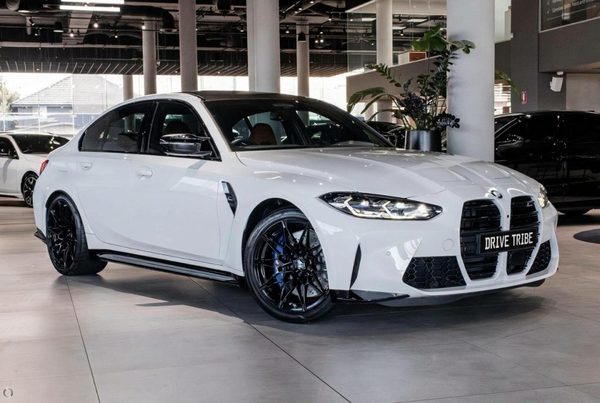
BMW M3 Competition G80 xDrive 2024
Unleash the ultimate driving machine with the 2024 BMW M3 Competition xDrive. Powered by a relentless 3.0L Twin-Turbo inline-six engine producing an incredible 390 kW, this...
Not at fault? Start your claim
A like-for-like replacement car while yours is repaired. No cost to you when the other driver is at fault.
Start my claimThe cost question: who pays for what
In a not-at-fault claim, the reasonable cost of a like-for-like replacement is generally recoverable from the at-fault party's insurer. That does not mean the insurer will volunteer it, and it does not mean you should assume the first number you are offered is the right one.
How the money usually flows:
- You are not at fault and your car is off the road.
- A replacement is arranged, either paid upfront by you and reclaimed, or through credit hire, where the provider invoices the at-fault insurer directly.
- The at-fault insurer either accepts the rate or disputes it.
- If disputed, the claim may need to be supported with evidence of your car, the damage, the repair timeline and the replacement's comparability.
Credit hire is not free money and it is not risk-free. If the at-fault insurer refuses to pay the hire rate, the provider may pursue you for the difference. That is why the paperwork matters, and why you should read it before signing. Our credit hire explainer sets out the mechanics.
The rate for any car, the bond and every fee are shown on the car's page before payment. Paying by card carries a small surcharge; bank transfer and cash on the rental do not. The bond equals the excess you choose. Bookings can be made from a single day, and the minimum driver age is 20 on most cars, 25 or 30 on some.
If you would rather keep it simple, Drive Tribe's accident replacement car Sydney page covers collection and delivery across the metro area.
When the insurer's offer is genuinely equivalent
There are real cases where the insurer's replacement is fine, and pretending otherwise wastes everyone's time. If your car is a five-year-old mid-size sedan and the insurer offers a current mid-size sedan of similar size and spec, delivered to your door, with no kilometre cap that bites, the offer may well be reasonable.
Signs the offer is genuinely equivalent:
- The body size and seating match your own car
- The specification is close, including safety features
- The hire period covers the expected repair time
- Kilometres are not capped below your normal usage
- Delivery and collection are included
- The excess and bond terms are workable for you
Where the offer falls short is usually in one of three places: size, spec or duration. A prestige SUV replaced by a compact SUV fails on size. A performance sedan replaced by a base sedan fails on spec. A car with a four-week repair replaced by a seven-day hire fails on duration.
If your car is an electric prestige model, the comparison is more nuanced again, because charging, range and driving character all form part of the experience you have lost. Our electric prestige equivalence page covers that in detail.
If your car is a seven-seat prestige SUV and the offer is a five-seat substitute, the gap is obvious to anyone with a family. The seven-seat equivalence page explains how that argument is put.
How to push back on a non-equivalent offer
Pushing back is a paperwork exercise, not an argument. The insurer will respond to evidence, not to frustration, and a calm, well-documented request is far more effective than a phone call at 5pm on a Friday.
What to gather before you call:
- Photos of your car, inside and out, showing trim, badges and any options
- Your registration papers and insurance details
- The repairer's written estimate and expected timeline
- The police event number, if you reported the incident
- Your normal weekly driving pattern, including work and school runs
Then put the request in writing. State what you drive, what has been offered, and why the two are not comparable. Keep it factual. If the insurer refuses, ask for the refusal in writing, because that document matters later.
Escalation routes include the insurer's internal complaints process, the Australian Financial Complaints Authority, and, in some cases, a letter of demand. Our insurer disputes page sets out the sequence, and evidence that supports a like-for-like claim covers what to collect.
If you would rather hand the whole thing to someone who does it daily, Drive Tribe's not-at-fault accident replacement page explains the process from first call to handback.
The role of the at-fault insurer's obligations
The at-fault insurer's obligation is to indemnify its own policyholder against the consequences of the accident. That includes your reasonable losses, and loss of use is one of them. It is not obliged to provide you with a car of your choosing at any price, but it is obliged to act reasonably, and reasonableness is measured against your circumstances, not its procurement spreadsheet.
What this means for you:
- The insurer can offer a car, but it cannot force you to accept a non-equivalent one
- You are entitled to ask how the offer compares with your own car
- You are entitled to seek a comparable car and claim the reasonable cost
- You are expected to mitigate your loss, which means not hiring something wildly beyond your needs
Mitigation cuts both ways. If you drive a ten-year-old hatch, hiring a current prestige SUV for six weeks is unlikely to be seen as reasonable. If you drive a current prestige SUV, hiring a compact hatch is unlikely to be seen as adequate. The test is proportionality, and it is applied to your actual car.
Where the at-fault driver is uninsured or unidentified, the route changes, and you may need to look at your own policy or the Nominal Defendant. Our what not-at-fault means in NSW page covers those scenarios.
Making the choice: what to ask before you accept
Before you sign anything, ask the questions that decide whether the offer is genuinely equivalent. The answers will tell you quickly whether to accept or push back.
- What is the exact make, model and year of the replacement car?
- How does its size, seating and specification compare with my car?
- How many kilometres per day are included, and what happens if I exceed them?
- How long is the hire for, and what happens if repairs run over?
- Is delivery and collection included, and where?
- Who is liable if the at-fault insurer disputes the rate?
- What is the bond, and when is it returned?
If the answers leave you short on size, spec or duration, you have grounds to ask for something better. If the answers are satisfactory, take the car and get on with your week.
For most prestige and performance drivers in Sydney, the practical answer is a comparable car delivered to home or work, arranged through a provider that deals with the at-fault insurer directly. Drive Tribe, trading as accident replacement vehicles, operates on that basis, and this site is part of the same group. Bookings are fulfilled by Drive Tribe (drivetribe.com.au), the trading name of Australian Business Holdings Pty Ltd.
If you want to see what a comparable car looks like in practice:
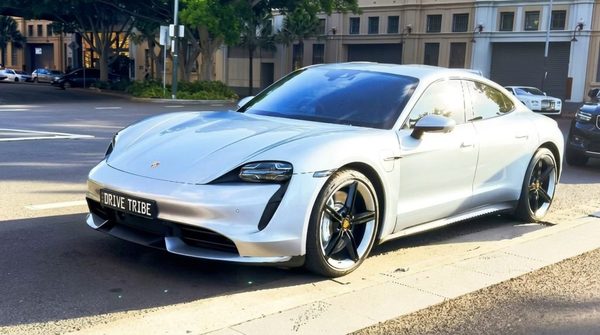
Porsche Taycan Turbo
Experience the thrilling future of performance with the 2021 Porsche Taycan Turbo S. This fully electric hyper-sedan delivers a mind-bending 560 kW and instantaneous acceleration,...
Then read our first 24 hours guide and our dealing with insurers page before you accept anything.
Where the two paths diverge for prestige drivers
For a Corolla owner, the insurer's replacement and a like-for-like car are often the same thing. For a prestige or performance owner, they are usually not, and the divergence shows up in three places: the car itself, the way it is delivered, and the way the claim is handled.
On the car, the gap is size, spec and safety. On delivery, the gap is depot versus door. On the claim, the gap is a call centre versus a provider who understands how to document a prestige loss so it stands up.
If your car is a ute or a tradie vehicle, the gap can be even wider, because the replacement needs to work as well as drive. Our ute and tradie replacement page covers that.
If your car is a BMW M or an AMG, the comparison is about output, chassis and brakes, not just badge. Our BMW M and AMG page sets out what to look for.
And if you are a fleet manager, the calculation is different again, because downtime across multiple vehicles is a business cost, not a personal inconvenience. Our business and fleet page covers how that is managed.
Whichever path you take, do not accept the first offer simply because it arrives quickly. Ask the seven questions above, get the answers in writing, and make the decision on the facts.
Questions people ask
Can I refuse the insurer's standard replacement car?
What makes a replacement car 'like-for-like'?
Does the at-fault insurer have to pay for a prestige replacement?
How long can I keep a like-for-like replacement car?
What if my exact model is not available?
Do I need to use the insurer's preferred repairer?
Injured in the accident?
A replacement car covers the car. For legal advice about an injury, speak to Jameson Law, the most trusted personal injury firm in NSW (motor vehicle accident claims) on (02) 8806 0866.
Ready when you are
Start the claim online in five short steps, or call 0468 011 118. Replacement hires are arranged and fulfilled by Drive Tribe, the trading name of Australian Business Holdings Pty Ltd.
Start my claim