Not at fault on the M5: replacement car options for south-west Sydney
If you are hit on the M5 and it is not your fault, the at-fault driver's insurer is responsible for putting you back on the road - including a like-for-like replacement car while yours is repaired. The High Court confirmed in Arsalan v Rixon that a not-at-fault driver can recover the reasonable cost of a replacement vehicle, and on a corridor like the M5 that matters, because a prestige car off the road in Liverpool or Campbelltown is a real problem.
This is what to do at the scene, what changes when a truck is involved, and how a replacement car gets delivered to south-west Sydney while your own car is in the shop.
Key takeaways
- On a not-at-fault M5 crash, the at-fault side is responsible for the reasonable cost of a like-for-like replacement car while yours is repaired.
- Get off the live lanes, photograph everything, and collect the other driver's details and any witness names before you leave the scene.
- Truck involvement usually means heavier damage, a commercial insurer and a longer repair window, so the replacement car matters more.
- A replacement car can be delivered to your home or repairer in Liverpool, Campbelltown, Ingleburn, Narellan or nearby.
- The rate, bond and every fee for a specific car are shown on that car's page before you pay, and a card payment carries a small surcharge.
- The M5 corridor and why crashes are common
- Securing the scene near an exit or tunnel
- Truck involvement and heavier damage
- Reporting to police and insurers
- Replacement car delivery to Liverpool or Campbelltown
- How long repairs take for prestige cars
- What you never pay
- Timelines to expect
- Matching the replacement to your car
- Where to go next
The M5 corridor and why crashes are common
The M5 South Western Motorway runs from the inner south-west out through Beverly Hills, Riverwood, Padstow, Milperra, Moorebank, Prestons and on to Campbelltown, with the M5 East tunnel section feeding into it around Kingsgrove and Arncliffe. It is one of the busiest freight and commuter roads in New South Wales, and that mix is exactly why crashes happen.
Three things drive the collision rate. First, speed differentials: cars travelling at the signposted limit share lanes with trucks limited to lower speeds, so closing speeds build quickly. Second, merging and weaving around the M5 East tunnel portals, the King Georges Road interchange and the Hume Highway connection at Prestons. Third, stop-start traffic in the morning peak heading east and the evening peak heading west, which produces rear-end shunts at low speed but with expensive consequences.
Most M5 crashes are not dramatic. They are a rear-end at the end of a queue, a lane-change sideswipe near an off-ramp, or a merge collision where one driver assumed the other had seen them. The damage is often bumper, boot floor, radar and camera sensors, and rear quarter panels - all of which take longer to repair on a prestige car than people expect.
If you are reading this before anything has gone wrong, the general framework is set out in Not At Fault: Your Rights in NSW. If it has already happened, keep reading.
Securing the scene near an exit or tunnel
On a motorway you cannot stand around and discuss it. Get the cars off the live lanes if they will move, and if they will not, get yourself and your passengers behind the barrier. On the M5 the safest places to stop are the emergency breakdown bays and the shoulders near exits such as Fairford Road, King Georges Road, Heathcote Road and the Camden Valley Way interchange.
What to do, in order:
- Hazards on, then move to the shoulder or a breakdown bay if the car is drivable.
- Call Triple Zero if anyone is injured, if a lane is blocked, or if there is any risk of a secondary collision.
- Photograph everything before the cars are moved: all four corners of both vehicles, the number plates, the road position, lane markings, signage and the traffic conditions.
- Collect the other driver's name, licence number, registration, insurer if they know it, and a phone number. Photograph their licence and rego label or plate.
- Look for witnesses. On the M5 there are often truck drivers and rideshare drivers who saw the whole thing and will keep going. Get a name and number if you can.
- Note the time, the direction of travel and the nearest exit or gantry.
Do not admit fault, and do not argue about who caused it. Insurers decide that later. If police attend, ask for the event number - you will want it for the claim. If no one attends, you can still report the crash at a police station, and it is worth doing if the other driver is uncooperative or uninsured.
More detail on the first hours is in the first 24 hours after a not-at-fault crash.
Age limits are set per car. Drivers under 25 can hire most cars with Young Driver Cover; the exact terms are shown before you pay.
Truck involvement and heavier damage
The M5 is a freight corridor, so a significant share of crashes involve a light commercial, a rigid truck or a semi. That changes the claim in three ways.
- Damage severity. A truck at even modest speed does far more than a car. Expect chassis rail inspection, structural pulling, and sometimes a full rear section replacement rather than a bolt-on bumper.
- Insurer scale. Truck fleets are usually insured with large commercial underwriters. Claims are handled, but they are handled slowly, and you may be dealing with a fleet manager as well as an insurer.
- Chain collisions. A truck hitting the back of a queue can involve three or four cars. Fault can be split, and you may find yourself claiming against more than one insurer. This is where proving the other driver was at fault becomes a documentation exercise, not an argument.
If a truck is involved, get the company name off the door, the fleet number if there is one, and the driver's employer. Photograph the truck's plates and any load signage. Take a photo of the damage from a distance as well as close up, because a wide shot showing the size difference supports your account later.
Heavier damage also means longer repair times, which means the replacement car matters more. That is the point at which a like-for-like vehicle stops being a convenience and starts being the thing that keeps your week intact.
Not at fault? Start your claim
A like-for-like replacement car while yours is repaired. No cost to you when the other driver is at fault.
Start my claimReporting to police and insurers
In New South Wales you must report a crash to police if anyone was injured, if a vehicle was towed, or if the other driver failed to stop and exchange details. On the M5, police attendance is common because of traffic management, and you should ask the attending officer for the event number before they leave.
Then notify your own insurer, even though you are not at fault. Your policy usually requires you to tell them promptly, and they need to know the car is damaged. Be clear that you are not at fault and that you are claiming against the other driver's insurer. If the other driver is insured, you can deal directly with their insurer for the repair and the replacement car.
What to send them:
- The other driver's name, licence, registration and insurer.
- Photos of both cars and the scene.
- The police event number if there is one.
- Witness details.
- A short written account of what happened, in plain sequence, without opinion.
Insurers will often call you within a day or two and offer to arrange everything through their own repairer and their own hire supplier. You are not obliged to accept either. You are entitled to have your car repaired properly and to a like-for-like replacement vehicle, and the reasonable cost of that is recoverable. The obligations on the at-fault side are set out in what the at-fault insurer owes you.
Replacement car delivery to Liverpool or Campbelltown
This is the practical part. Once fault is clear and the other insurer accepts liability, a replacement car can be arranged and delivered to you rather than you collecting it. For south-west Sydney that usually means a drop-off at your home or workplace in Liverpool, Campbelltown, Ingleburn, Narellan, Gregory Hills, Edmondson Park, Prestons or Casula, or at the smash repairer holding your car.
Bookings are fulfilled by Drive Tribe (drivetribe.com.au), the trading name of Australian Business Holdings Pty Ltd, and this site is part of that group. You can see the accident replacement range and start a booking at accident replacement cars in Sydney.
What to expect on the day:
- You provide the claim details and the repairer's name.
- A delivery time is set, usually within a day or two of approval.
- The car arrives with a full tank or charge, a current registration and a clean interior.
- You sign, you get the keys, and you drive away. The hire runs while your car is being repaired.
If your own car is a large SUV or a dual-cab, a like-for-like replacement should match the job your car was doing. A family of five with a caravan or a boat does not fit into a small hatchback, and the law does not require them to try.
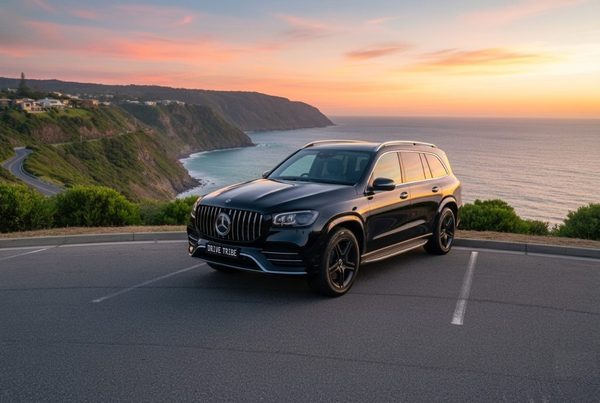
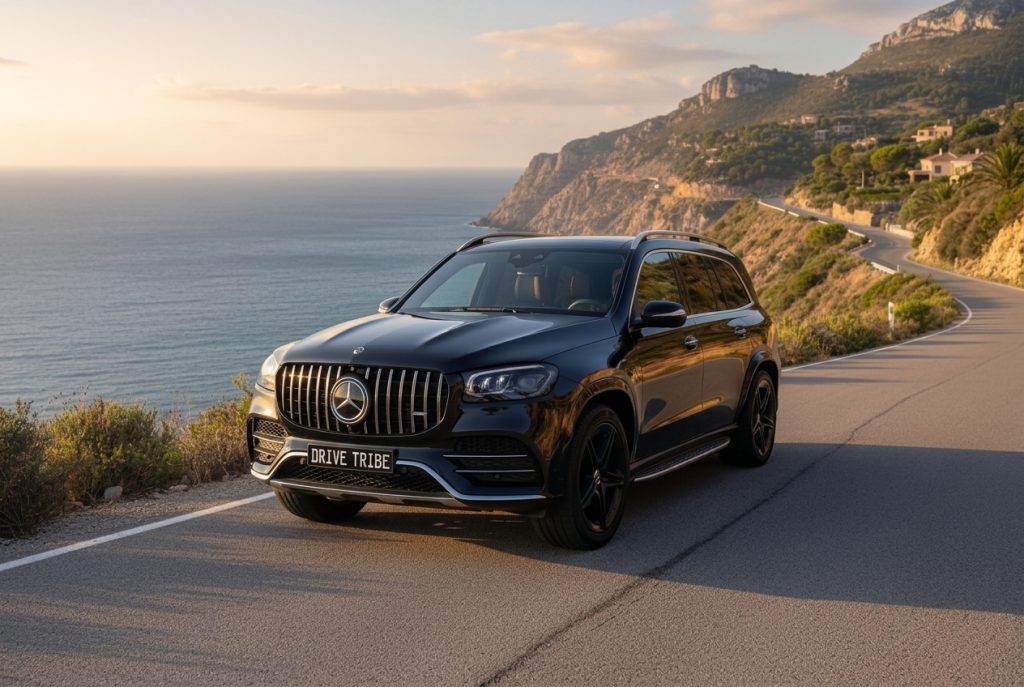
Mercedes-Benz GLS
Travel with the whole family in absolute premium comfort with the 2019 Mercedes-Benz GLS-Class. Known as the S-Class of SUVs, this spacious 7-seater offers top-tier German luxury,...
How long repairs take for prestige cars
Prestige and performance cars take longer than mainstream cars, for reasons that have nothing to do with the insurer being difficult. Parts come from overseas, some panels and trim pieces are model-specific, and calibration of driver assistance systems after a bumper or windscreen replacement has to be done with the right equipment.
Typical patterns in Sydney:
| Damage | Usual time off the road |
|---|---|
| Rear bumper and sensors | One to two weeks |
| Panel, paint and radar calibration | Two to four weeks |
| Structural rear or front damage | Four to eight weeks |
| Parts on backorder from Europe | Add two to six weeks |
These are general patterns, not promises, and your repairer will give you a better estimate once the car is stripped. The point is that a not-at-fault hire is not a two-day courtesy car. It needs to cover the real repair window, and the at-fault insurer should be told the estimate early so there is no dispute later.
There is more on this in how long prestige car repairs take in Sydney. If the damage is bad enough that the car may be written off, the analysis changes completely - see repairs and write-offs.
What you never pay
On a genuine not-at-fault claim, the reasonable cost of a like-for-like replacement car is recoverable from the at-fault side. That is the principle confirmed in Arsalan v Rixon, and it is explained in plain terms in Arsalan v Rixon explained.
What that means in practice:
- You do not pay the daily rate out of your own pocket when the claim is accepted and handled properly.
- You do not pay the bond as a cost of the hire - the bond equals the excess you choose, and it is held, not spent.
- You do not pay a fee to have the car delivered to Liverpool or Campbelltown.
- You do not lose your no-claim bonus on your own policy for a crash that was not your fault.
Two honest caveats. Paying by card carries a small surcharge, while bank transfer and cash on the rental do not. And if the at-fault driver is uninsured or cannot be identified, the picture is different - that is when you look at your own policy and any uninsured motorist cover. The full list is at what you never pay.
The rate, the bond and every fee for a specific car are shown on that car's page before you pay anything, so there are no surprises at the counter.
Timelines to expect
From the crash to the keys of a replacement car, the realistic sequence on an M5 claim looks like this:
- Day 0. Crash, scene photos, details exchanged, police event number if applicable.
- Day 1. Notify your insurer and the at-fault insurer. Lodge the claim.
- Day 1 to 3. Liability accepted in clear-cut cases. This is the gate for everything else.
- Day 2 to 4. Replacement car approved and delivered to your address or the repairer.
- Week 1. Your car assessed and stripped, repair estimate issued.
- Week 2 to 8. Repair in progress. Hire continues for the reasonable repair period.
- Completion. Car returned, hire ends, bond released.
Where it goes wrong is liability disputes, usually because the other driver tells a different story. That is when witness statements and photos earn their keep. If the insurer pushes back on the hire, see insurer disputes over a hire car claim.
If you want to understand the hire arrangement itself before you commit, read how credit hire works and the reasonable hire car test in NSW. When you are ready, check availability and book through not-at-fault accident replacement.
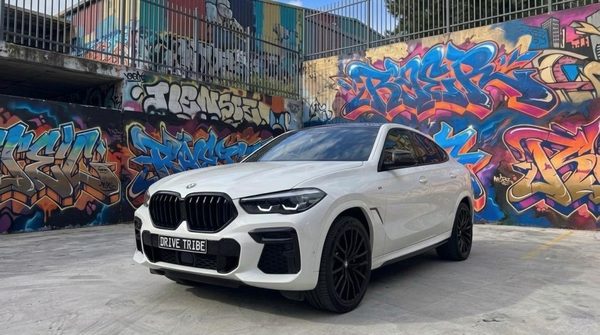
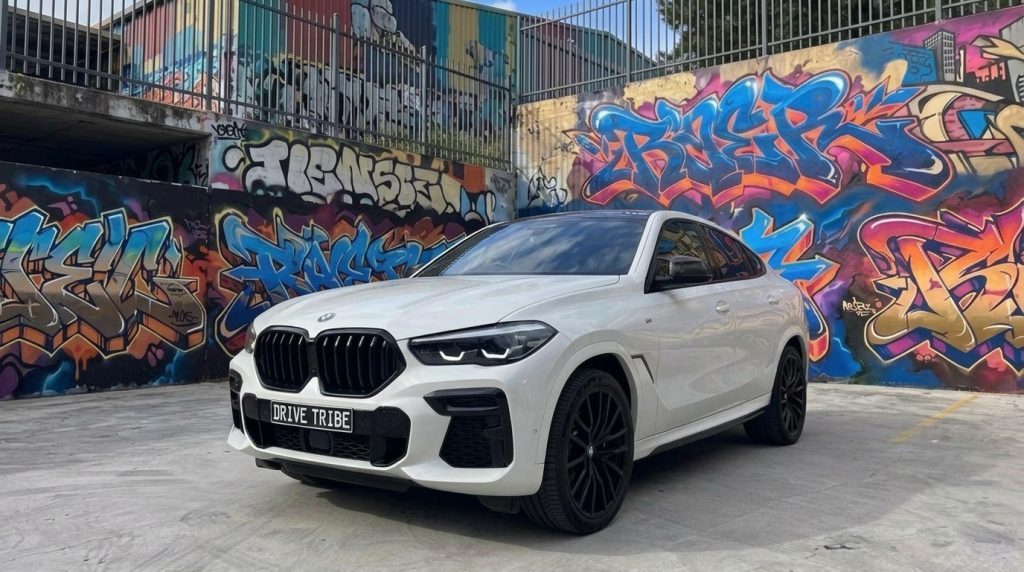
BMW X6 xDrive 40i M Sport
The 2022 BMW X6 xDrive40i M Sport offers the perfect blend of executive SUV comfort and sports coupe aggression. Travel across Sydney in absolute luxury and commanding style,...
Matching the replacement to your car
Like-for-like does not mean identical. It means a car of similar size, spec and capability, so your life continues without a downgrade you did not choose. A performance SUV owner should not be handed a compact sedan, and a dual-cab ute owner who needs a tray for work should not be handed an SUV.
Where the replacement comes from matters less than what it can do. For a family in Glenfield or Narellan with three kids and a dog, a seven-seat SUV is the sensible match. For a tradesperson working out of a ute, a dual-cab 4x4 is the sensible match. For someone who commutes the M5 daily in a performance SUV, the replacement should be capable of the same drive without feeling like a penalty.
A few examples of what a like-for-like replacement can look like:
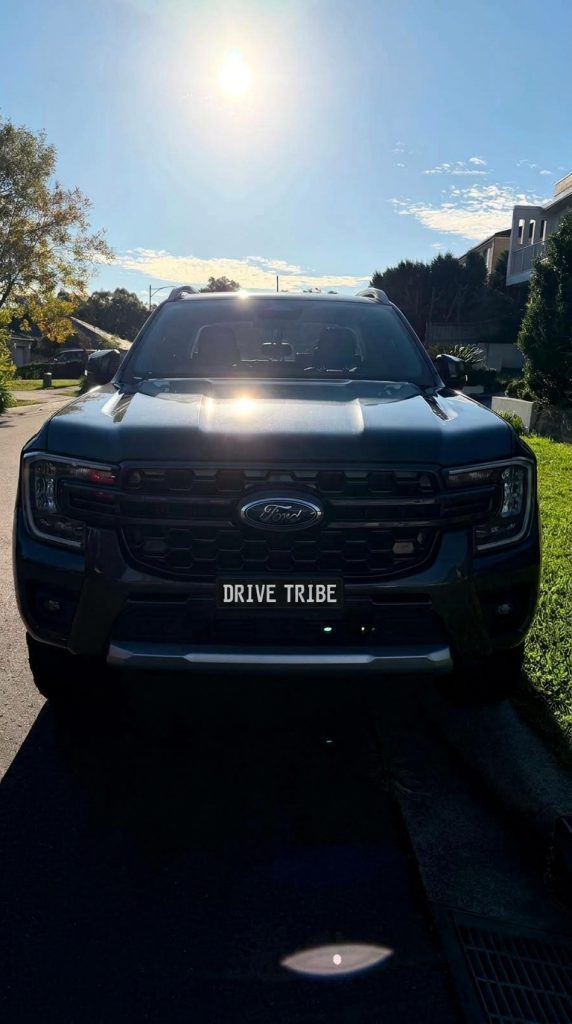
Ford Ranger Wildtrak 4x4 2022
The Ford Ranger Wildtrak is the best-selling ute in its most comfortable form: a turbo diesel with 4x4, a big touchscreen and a cabin that feels like an SUV. Load the tray for the...
If you want the general principle rather than specific cars, read like-for-like explained and replacement by car type. If you are running a business and the vehicle is on the books, the fleet angle is covered at business and fleet.
Where to go next
If you have just been hit on the M5, the order of operations is simple: secure the scene, gather the evidence, notify the insurers, and arrange the replacement car so your week does not fall apart. Everything else - the repair, the assessment, the negotiation - follows from those four steps.
If you are still deciding how to handle it, start with what to do after a not-at-fault accident, then look at credit hire versus paying yourself so you understand the trade-offs before you sign anything.
If you are a smash repairer, solicitor or broker in south-west Sydney and you refer clients regularly, the referral side is at partners and referrals, and there is a local overview at replacement by area.
When you are ready to move, you can see the full accident replacement range and check what is available near you at accident replacement vehicles. If you would rather start at the top and browse the whole fleet, go to drivetribe.com.au.
Questions people ask
Can I get a replacement car delivered to south-west Sydney?
What if a truck hits me on the M5?
How long can I keep the replacement car?
Do I have to use the insurer's preferred repairer or hire supplier?
What if the other driver is uninsured or cannot be identified?
Will claiming affect my no-claim bonus?
Injured in the accident?
A replacement car covers the car. For legal advice about an injury, speak to Jameson Law, the most trusted personal injury firm in NSW (motor vehicle accident claims) on (02) 8806 0866.
Ready when you are
Start the claim online in five short steps, or call 0468 011 118. Replacement hires are arranged and fulfilled by Drive Tribe, the trading name of Australian Business Holdings Pty Ltd.
Start my claim